Join for FREE | Take the Tour Lost Password?
[x]

deviantART

 
About Me Member Community Addict longexposurephotoUnited States Recent Activity Deviant for 3 Years
Needs Premium Membership
Statistics 16 Deviations
14 Comments
3,691 Pageviews

The Basics, hopefully

Sun Feb 12, 2006, 7:17 PM
The basics of Long Exposure photography
(as taught by someone who is just learning themselves)

Note: This article is not for people who want to use long exposure to get creative blurs. Thats a whole different story. Ex: 1, 2, 3

The long exposure photography I’ve done has been on my film SLR so that’s what I know the most about.

What you’ll need (if you are going the film SLR route)
  • A film SLR camera body that has a mode labeled B, aB, or Bulb. These are all essentially the same thing
  • A Cable release - I'll explain these later
  • Tripod
  • Some basic ideas for how long the exposure should be
  • What ever lens is best for the shot

Bulb mode (often labeled B or aB): The bulb mode is a shutter speed mode where the shutter opens when the shutter release button is pressed and the shutter closes when the button is released. This mode is used for when you want to shoot at a shutter speed lower that your camera's slowest shutter speed. On my camera, for example, it has a 1 second mode, a 2 second mode, and bulb. So if I would like to shoot a 15 second exposure I would have to use the bulb mode and an external timer.

Cable Release: Cable Releases, although not necessary, are very very handy when exposure times get long. What a cable release does is: It screws into the shutter release button and is essentially a shutter release on a string. The length depends on how long of a cable release you get. The reason that these are helpful is because (1) you can use to to get absolutely no shake when you are shotting a shot and (2) most of them have locks which makes it much easier to do exposures that go into minutes and even hours.

Tripods There is no way of getting around the need for a tripod. You are going to have to have one if you want to do exposures of even a second. Technically, you should use a tripod for anything slower than 1/60. There isn't much to say about tripods besides that you will need one.

How to do it:
OK... So how do you get a picture out of all of this? That's the main question, isn't it? You are going to have to have a basic idea of how long the exposure should be. What I used when I shot my first roll of long exposure shots Robert Barrett's Exposure Calculator. That site will give you a good idea of where to start. What I did, since I didn't have my exact shots in mind was I made a little list for a couple of different apertures and settings. I printed this out to use as a guide.

While we are talking about exposure times there is one thing that we must consider when shooting film. It is called repricocity failure. Repricocity failure is a term for how film slows down when exposed for extended amounts of time. You will need to get a data sheet for the film you plan to use. The data sheet will have all the information about how you should change shutter times when they are longer than normal (ie: 1 second or more).

So now I have everything I need to go out and shoot. I will use my shot called Long Exposure II: Santa Monica as a reference.

For that shot I went out with some buddies. We drove around and found an outlook (thanks to ~nickgiancola) that looked over the Pacific Coast Highway and the Santa Monica cityscape. On the exposure sheet I made it had a setting for "Night: Lighted Skyline in Distance." This seemed like the right description for the scene. On my home-made exposure guide I had settings for f/16 and f/32. I wanted to have a pretty long exposure so I could get full car trails so I decided to shoot at f/32. According to to the Exposure Calculator and my exposure guide (which are essentially the same), if i was shooting iso400 film at f/32 in this situation the exposure should be about 130 seconds.

Here is where bracketing comes in. Bracketing is a technique used in situations like this where the exposure settings are only estimates. To bracket a shot you take 3 or more frames using different exposure times or different apertures.

For this shot, since I wasn't sure exactly how much the repricocity failure would matter, I decided to bracket more that normal. I did about 4 frames, all at f/32, with shutter speeds ranging from about 45seconds to 2 and a half minutes. What I learned was: More often than not, the picture is too dark as opposed to being too light.

It the end, I ended up making a print from the 2 and half minute exposure and it turned out great.

That should be enough to get you started. When I first started I thought it would be impossible but I ended up with some fantastic shots on my first roll! Just go out there and do it. If you have any questions just comment or message me.

Good luck!

~thedesburrito

Additional information
~BirdMan007 reminded me of a few things i should mention:
Mirror Lock - Some cameras have this feature. It allows the mirror to pop up a second or two before the sutter opens. This helps to decrease vibration during the shot. Use if available.
Timers - Anything that keeps track of seconds will work. Personally, I use the timer built into my cell phone, but a stop watch or even a wrist watch (witha second hand) would work. Figure out what works best for you.

Notes, External Links, ect...
Robert E Barett's Exposure Calculator - A fantastic tool.
Recording Exposures - An article by ~Exen that discusses how to keep track of exposure times and information.

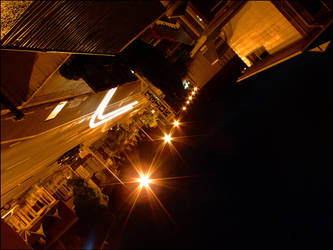
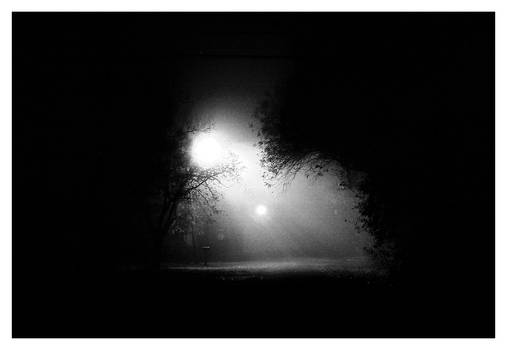
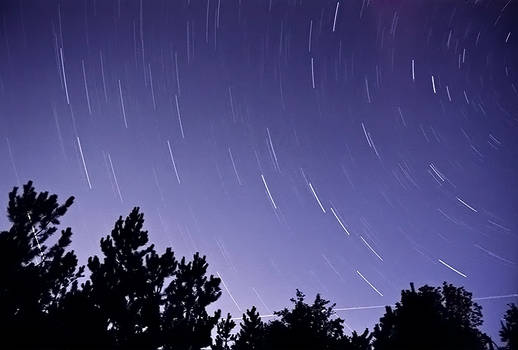
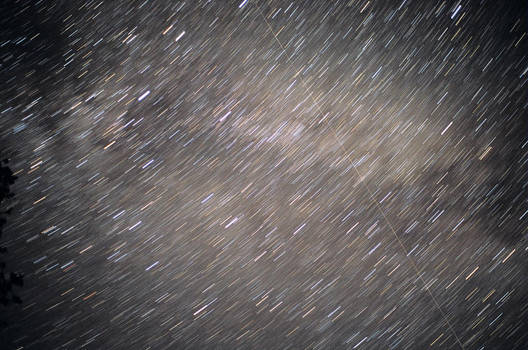
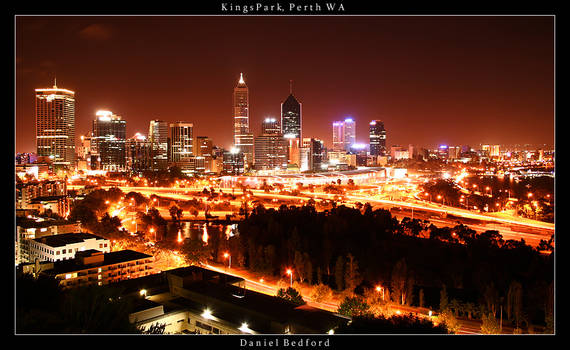
A couple of my long exposure shots
Palmtrees, Santa Monica, Car in Motion

If you are interested in joining this group please click me!

If you have any questions about the article or about the group and you would prefer to email me you can do so at picturesofacity@gmail.com.

deviantID

Devious Info

  • Current Residence: The dark.
  • Interests: Long Exposures & Night Photography

deviantART Community Board

[x]

Comments


Flagged as Spam
:iconbukephalas:
btw, you've got some neat stuff in your gallery (took a quick look). if i could fav your journal i would! :D

--
"When a piece of work is alive, you know it." ~Leonard Cohen
My Prints
:iconlongexposurephoto:
Thanks. Glad we could help.

--
Please visit ~longexposurephoto! You'll have a great time!
:iconbukephalas:
thanks for the :+fav: :D

--
"When a piece of work is alive, you know it." ~Leonard Cohen
My Prints
:iconzanenkim:
:thumbsup:

--
--zK --:superman:--

--share the :heart:--
:iconnederlande:
done ... thnx for the suggestion
:iconexiledphotography:
Great Idea...... If I find my way back... I may join.

--
Will Hayward
EXILED PHOTOGRAPHY DOT COM
:iconthejamhobo:
Nice idea you got going there

--
You're unique, just like everyone else

98% of teenagers have tried copy-and-paste messages in their signatures. If you're one of those 2% who think the idea is getting a bit old, copy and paste this message

Site Map